

What is the context of Bona Iqiniso
What is ‘context’?
Context refers to the circumstances, conditions, or settings in which something occurs or is understood. It provides the background information and details that are necessary to fully comprehend or interpret Bona Iqiniso.
In summary, context provides the framework and additional information necessary to understand and interpret something accurately. It helps to establish meaning, clarify intentions, and make sense of various aspects of communication and situations.
The basic building block to describe a context is a reference model, also called a meta-model. Bona Iqiniso is a methodology and therefore we need to define a methodology reference model, which will lead to a software testing reference model or software testing framework.
What Makes a Methodology reference model?
Bona Iqiniso is a methodology, and as such its context is a reference model explaining the components of a methodology.
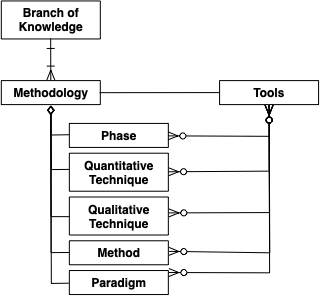
A methodology provides a systematic framework for conducting studies, analyzing data, and achieving desired outcomes. But what precisely makes a methodology a methodology?
At its core, a methodology can be understood as a set of principles, guidelines, procedures, and tools that govern a particular field of study or practice, the branch of knowledge. It establishes a structured approach to address research questions, achieve objectives, and solve problems. A well-defined methodology outlines the steps to be followed, the data collection and analysis techniques to be employed, and the overall strategy to be adopted.
Tools may support one or more parts of the methodology.
Elements of a Methodology:
- Life cycle: refers to the series of stages or phases in which software testing is involved, from the inception of a product to the decommissioning, termination, or completion of the product. It describes the progression and development over time, highlighting the various transformations and characteristics exhibited at each stage.
- Qualitative techniques: methods and analytical approaches used to gather and interpret non-numerical data. These techniques focus on understanding the quality of a product, rather than quantifying or measuring it. Qualitative research is exploratory in nature and aims to gain insights into people’s experiences, perceptions, beliefs, and behaviours.
- Quantitative techniques: research methods and analytical approaches used to collect and analyze numerical data. These techniques focus on quantifying variables, measuring relationships, and conducting statistical analyses to draw objective conclusions. Quantitative research aims to provide empirical evidence, identify patterns, and generalize findings to a larger population.
- Methods: refers to the specific procedures, techniques, and tools employed to gather data, analyze information, and draw conclusions. It is a systematic and organized approach that Bona Iqiniso follows to address goals and objectives.
- Paradigm: refers to a framework or perspective that guided Bona Iqiniso to conceptualize, and understand software testing. It contains assumptions, beliefs, standards, theories, and methodologies that shape the way Bona Iqiniso perceives software testing.
Importance of Methodology:
- Consistency and Reliability: Methodologies provide a consistent and reliable framework for conducting software testing.
- Rigour and Objectivity: Methodologies promote rigour and objectivity in software testing. By adhering to a predefined set of procedures, biases and subjective interpretations can be minimized, increasing the accuracy and robustness of the results.
- Efficiency and Time Management: A well-defined methodology helps optimize efficiency and time management. Test professionals can focus their efforts on relevant tasks, ensuring that resources are allocated effectively and deadlines are met.
- Reproducibility and Progress: Methodologies facilitate reproducibility, enabling other test professionals to validate and build upon existing work.
Recent Comments