



1. Background
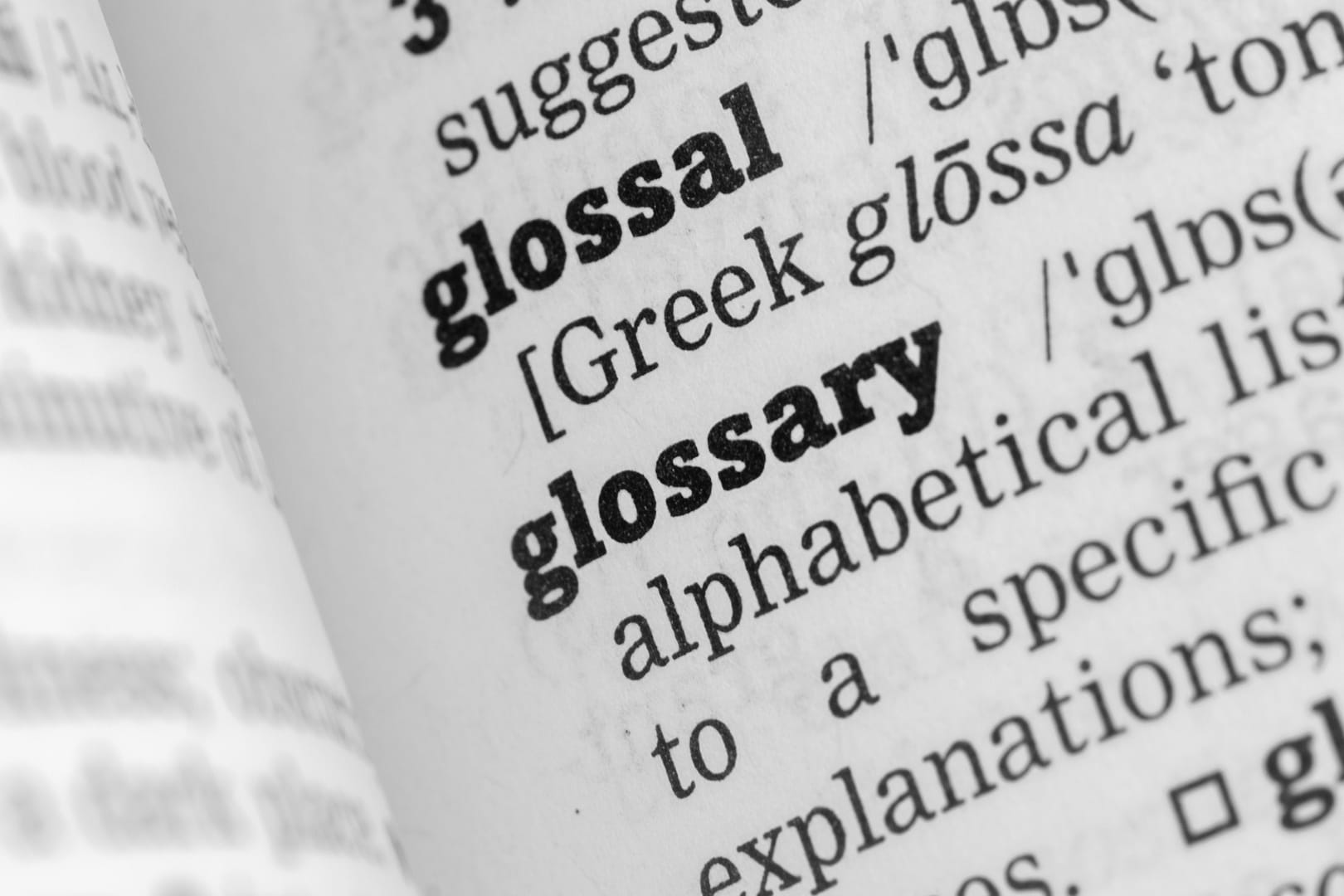
A glossary is a specialized reference tool that provides definitions and explanations of specific terms or jargon used within a particular field or subject area. Glossaries are particularly useful in technical or academic writing where complex terminology is frequently used, helping to enhance comprehension and facilitate effective communication.
2. Problem
When individuals use different terminology, it can lead to confusion and misunderstandings. Language plays a crucial role in communication, and when people have different interpretations or meanings for certain terms, it can hinder effective understanding. This issue can arise in various contexts, such as professional settings, academic discussions, or even casual conversations. It becomes essential to establish common ground and clarify definitions to bridge the gap between different terminologies.


3. Solution
Creating and using a glossary is a valuable tool for organizing and understanding specific terms or concepts within a document or project. To create a glossary:
- Start by compiling a list of important terms or jargon that may be unfamiliar to readers.
- Define each term clearly and concisely, ensuring that the definitions are accurate and easy to understand. It is also helpful to provide examples or context to further clarify the meaning of each term.
- Once the glossary is complete, it can be included at the beginning or end of the document or project, or terms may be highlighted when hovering over them in a text. When using the glossary, readers can refer to it whenever they encounter an unfamiliar term, enhancing their comprehension and overall understanding of the content. It can also serve as a quick reference guide for anyone who needs a reminder of the definitions as they read through the material.
4. Advantages
- Improved comprehension: A glossary helps readers understand the meanings of unfamiliar terms, acronyms, or jargon used in a specific context.
- Enhanced clarity: It ensures consistency in the usage and understanding of terms within a document, preventing confusion or misinterpretation.
- Time-saving: Instead of searching for definitions elsewhere, a glossary provides quick access to relevant explanations, saving time and effort.
- Increased accessibility: Glossaries make technical or specialized content more accessible to a broader audience by providing definitions and explanations.
- Support for non-native speakers: People whose first language is not the document’s language can refer to the glossary to better understand the terminology used.
- Streamlined communication: A glossary promotes effective communication by aligning the vocabulary and terminology among different stakeholders.
- Standardization: In fields with multiple contributors, a glossary ensures consistent terminology across various documents, projects, or publications.
- Facilitates learning: Glossaries can be valuable educational tools, helping students or learners grasp new concepts and expanding their knowledge.
- Reference tool: It serves as a reference point for future use, allowing readers to revisit and reinforce their understanding of specific terms or concepts.


5. Disadvantages
- Limited space: Glossaries can take up valuable space in a document, especially if the content is extensive. This can make the document longer and harder to navigate.
- Increased complexity: Including a glossary adds an extra layer of complexity to a document, requiring readers to refer back and forth between the main text and the glossary. This can be confusing and disrupt the reading flow.
- Maintenance effort: Glossaries require regular updates and revisions, especially in dynamic fields where new terms are constantly emerging. This can be time-consuming and resource-intensive.
- Incomplete coverage: Glossaries may not include every term or concept mentioned in the document, leading to gaps in understanding for readers. They often only focus on key terms, leaving out more nuanced or specific terminology.
- Language barriers: Glossaries are typically presented in one language, which can be limiting for documents intended for a diverse or international audience. It may not cater to readers who are more comfortable with a different language.
- Accessibility issues: Glossaries may not be easily accessible to all readers, particularly those with visual impairments or alternative reading methods. This can hinder their ability to fully benefit from the explanations provided in the glossary.
6. Conclusion
Having a glossary is advantageous because it helps to define and clarify important terms and concepts used in a particular context, making information more accessible and comprehensible for readers or users. By providing concise and precise definitions, a glossary allows individuals to quickly grasp the meaning of specific words or phrases that may be unfamiliar or technical in nature.
One of the primary benefits of a glossary is its ability to enhance understanding and facilitate communication. When reading or using content that involves specialized terminology, it is common for individuals to encounter words or expressions that they may not fully comprehend. By including a glossary, authors or content creators can ensure that readers or users have a reliable resource to refer to, promoting clarity and eliminating confusion. This is particularly beneficial in fields such as science, medicine, law, or technology, where complex terminology is commonplace.
Moreover, a glossary improves accessibility by eliminating the need for individuals to search for definitions elsewhere. Instead of relying on external sources or conducting time-consuming research, users can conveniently access a comprehensive list of definitions within the same document or website. This saves valuable time and effort, allowing readers to focus on the main content without interruption or distraction.
In addition, a glossary promotes consistency and accuracy in communication. By establishing clear definitions for terms and concepts, authors can ensure that their intended meaning is effectively conveyed to the audience. This reduces the risk of misinterpretation or misunderstanding, fostering effective communication and preventing potential errors or confusion.
Furthermore, a glossary enhances the learning experience for readers or users. By providing concise explanations of key terms, individuals can expand their knowledge and gain a deeper understanding of the subject matter. This is particularly valuable for educational materials or technical documentation, as it empowers learners to engage with the content more effectively and independently.
Overall, incorporating a glossary into written or digital content offers numerous advantages. It not only defines and clarifies important terms and concepts but also enhances understanding, facilitates communication, improves accessibility, promotes consistency and accuracy, and enhances the learning experience. By providing a reliable resource for readers or users, a glossary contributes to the overall comprehensibility and effectiveness of the information being conveyed.
