

What is the concept of business motivation?
Business motivation refers to the driving force behind individuals and organizations to achieve their goals and objectives. In our case in the field of software testing. It encompasses the desire to succeed, excel, and make a difference in the industry.
OMG’s business motivation model is a comprehensive framework that aims to inspire and guide organizations in achieving their goals and objectives.
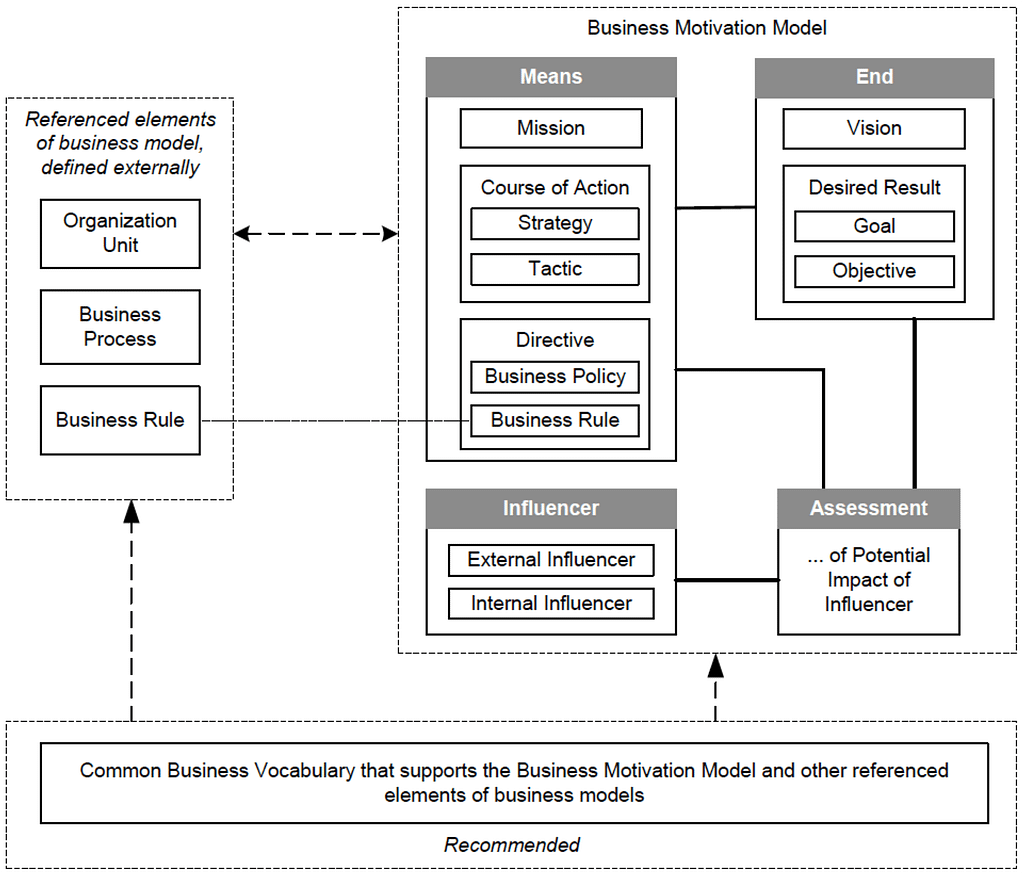
This model focuses on four key dimensions: vision, mission, strategy, and tactics. The vision sets the long-term direction and purpose of the organization, while the mission defines its core values and overarching goals. The strategy outlines the approach and actions necessary to achieve the mission, while tactics provide the specific steps and activities needed to implement the strategy. OMG’s business motivation model emphasizes the importance of alignment and coherence between these dimensions, ensuring that all aspects of the organization are working towards a common purpose. This model serves as a valuable tool for businesses to clarify their intentions, make informed decisions, and drive success. But how does this apply to software testing and how do we implement this in Bona Iqiniso?
The answer is in the software testing framework we use:

In this framework, there is a motivational part that translates into ‘processes’ on three levels. The organization part, the management part and the dynamic part.

The test motivation process is there because software testing itself is a means to an end. IT is a means to have working software in a production environment, but more importantly, it fulfills a number of quality needs: confidence, risk-free, maintainable, functionality, portability, etc.
These quality needs are imposed by a number of influencers (own organization, regulatory, clients, etc.) and lead to a number of quality and/or test requirements (the business rules in the business motivation model).
The organization test processes handle the mission, vision, policy, and organizational strategy part.
The test management processes handle the project strategy and strategy related to the tactics applied. The test plan handles the managerial part of the test organization and the applied test tactics (dynamic test processes).
The dynamic sub-test processes handle the tactics needed to achieve the goals and objectives.
Pragmatically
Since Bona Iqiniso wants to keep things simple and above all pragmatic, the test motivation is handled the same way as we handled it for Bona Iqiniso. By means of ‘rationales’. These are documents that provide:
- Some background (who are the influencers,
- The context (the problems to solve, the quality needs, etc.)
- The concept of a solution
- Advantages of the proposed solution
- Disadvantages of the proposed solution
- The goals and objectives the solution should achieve
- Paradigm: templates, guidelines, checklists, possible processes, dependencies, etc.
Conclusion
The test motivation is part of the software testing framework used by Bona Iqiniso and is covered in a rationale document
Recent Comments